The Nile tilapia has long been plagued by two deadly diseases called Motile Aeromonas Septicemia (MAS) and Streptococcosis among national breeders. Despite being a favorite freshwater consumption fish in Indonesia, it has suffered due to these diseases. Originating from the Nile River in North Africa, it's dubbed the "water chicken" due to the high demand for its meat, making it a valuable commodity among breeders.
The Aeromonas hydrophila bacterium causing MAS and Streptococcus leading to Streptococcosis have resulted in mortality rates ranging from 10 to 70 percent and 60 to 70 percent, respectively, among breeders. These bacterial diseases can attack the tilapia simultaneously, known as co-infection, damaging organs and causing inflammation or lesions. Symptoms include protruding eyes, darker coloration, and erratic movement patterns.
Researchers at the Freshwater Aquaculture Research and Development Center and Fisheries Extension (BRPBATPP) in Bogor, owned by the Ministry of Marine Affairs and Fisheries, embarked on finding a solution to these deadly tilapia diseases.
Their research, initiated in 2012, led to the development of a vaccine formula that effectively suppresses the growth of Aeromonas hydrophila and Streptococcus bacteria, preventing them from causing fatal diseases. This breakthrough was patented in 2018.

However, the challenge lies in the need for downstream product development for the tilapia vaccine discovery to be accessible to breeders. Without production and further development, the research outcomes remain confined to laboratories and scientific journals.
Receiving Research Funding from LPDP
Vaccinating fish isn't as commonplace among breeders compared to poultry or other livestock. The Ministry of Marine Affairs and Fisheries initiated the Fish Vaccination Movement (Gervikan) in 2009 to encourage fish vaccination for optimal health and improved yields.
The research and development of the Nile tilapia vaccine are linked to fulfilling various fish vaccine needs in the Gervikan program. However, scaling up production requires substantial further research funding.
Responding to this, the Education Fund Management Institute (LPDP) has a research funding program named Productive Innovative Research (RISPRO) to support the downstreaming of research products for public use. Led by Dr. Desy Sugiani, S.Pi, M.Si, the tilapia vaccine research team submitted a research proposal, approved for a two-year duration starting in 2019.
The total funding for this Nile tilapia vaccine research through LPDP's Endowment Fund for Research amounts to Rp1,467,350,000. The Covid-19 pandemic briefly extended the research duration by one year due to physical meeting restrictions.
Dr. Desy Sugiani highlighted that RISPRO's commercially oriented nature fits perfectly, aiming to scale up a technology-ready product (TKT-6) for mass production. This potential could bridge the gap between research findings and widespread usage.

The team of researchers working on the Nile tilapia vaccine, enrolled in the funding program RISPRO Commercial, originates from various disciplines within the field of biology. It comprises experts in microbiology, molecular biology, and includes the production team. By the end of the funding period, Desy and her team successfully completed all tasks according to the performance indicators set by RISPRO LPDP.
Collaborating with Fish Vaccine Manufacturers
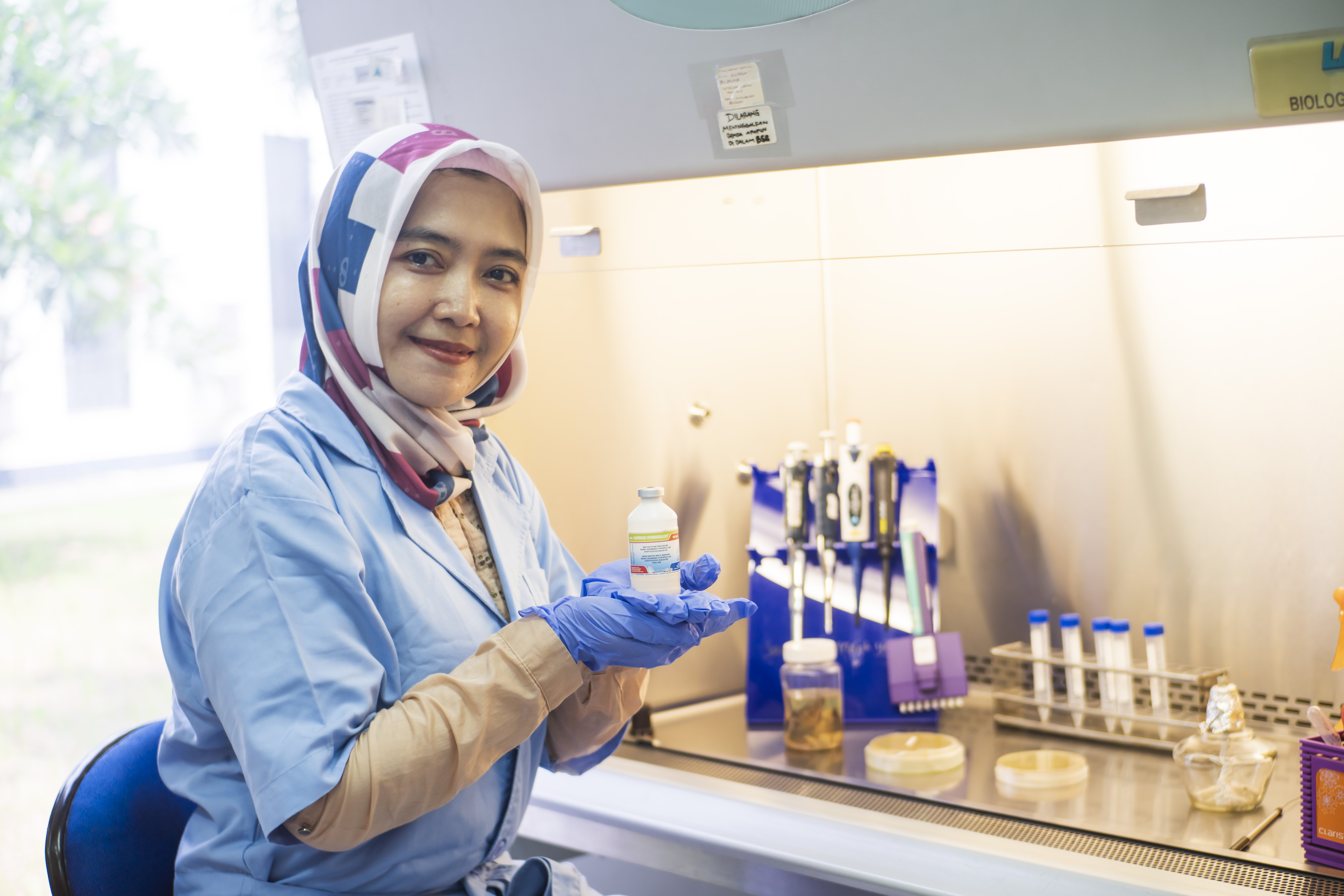
Under the RISPRO Commercial program, a prerequisite is partnering with a fabrication partner for research product production. PT Caprifarmindo Laboratories in Cimareme, West Bandung, was chosen to mass-produce and market the Nile tilapia vaccine, Caprivac Hydrogalaksi.
The production process at PT Caprifarmindo Laboratories started with receiving the Master Seed or Working Seed of A. hydrophila and S. agalactiae bacteria in 2020 from BRPBATPP and PT Caprifarmindo Laboratories in Bogor. This involved an industrial-scale bacterial production process, including inoculation-harvest, inactivation, and formulation into a solution for easy application through injection or immersion.
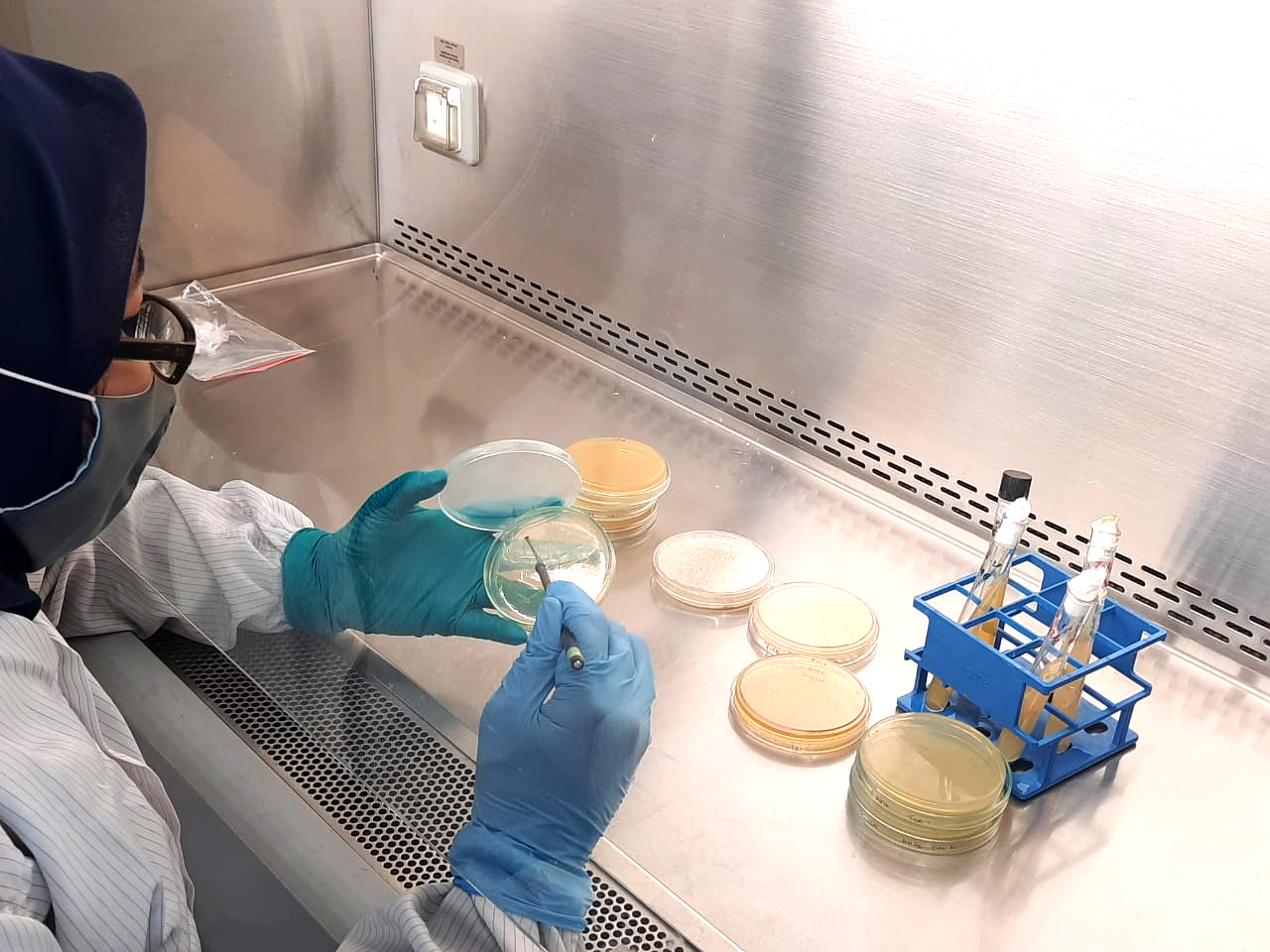
Field test results showed that Caprivac Hydrogalaksi achieved a relative percent survival (RPS) of over 60 percent against A. hydrophila and S. Agalctiae bacterial attacks after challenge testing. Additionally, it was deemed safe, not causing pathological changes or threatening the Nile tilapia's survival.
Caprivac Hydrogalaksi can be administered through immersion or injection. Immersion is recommended for Nile tilapia below 30 grams (considered as seedlings), while injection is for mature tilapia or those ready for harvest. Moreover, Caprivac Hydrogalaksi can be mixed with fish feed for booster vaccination or repeated vaccination needs.
Caprivac Hydrogalaksi has been available in the market since its launch in 2022, distributed by PT. Bina San Prima across Indonesia. Its price ranges from 188,000 to 250,000 Indonesian Rupiah depending on the market location, maintaining affordability and offering numerous benefits to tilapia breeders.
Indonesia's First Bivalent Vaccine for Nile Tilapia
Although various vaccines have existed for Nile tilapia diseases in Indonesia, Caprivac Hydrogalaksi marks the first bivalent vaccine capable of handling two bacterial diseases simultaneously. The bivalent vaccine's advantage lies in minimizing stress during vaccination, requiring only a single administration instead of two.
Overall, Caprivac Hydrogalaksi's benefits for Nile tilapia encompass enhancing immunity, potentially boosting production, ensuring food safety, and sustaining tilapia aquaculture.
Regarding potential side effects, PT Caprifarmindo Laboratories assured that Caprivac Hydrogalaksi doesn’t cause adverse effects on tilapia. However, improper handling during vaccination might induce stress and subsequently result in adverse effects.

Currently, Caprivac Hydrogalaksi has reached almost every part of Indonesia, from Java to Sumatra, Sulawesi, Kalimantan, and West Nusa Tenggara. Both the tilapia vaccine research team and PT Caprifarmindo Laboratories hope for extensive education support for tilapia breeders, emphasizing the positive economic, health, and environmental impacts of vaccination.
You can watch the complete discussion with the Nile tilapia vaccine research team on the LESSON program available on LPDP RI's YouTube channel.